
A routine review can become a difficult conversation without a rare diagnosis. The patient and their companion tell different stories. A suggestion meets a firm “no”. A plan that sounds simple does not fit someone’s circumstances.
These are the situations we want more room to explore in V2. Clinical knowledge matters, but knowing the options is different from finding out why someone is uncomfortable with them.
One situation, several perspectives
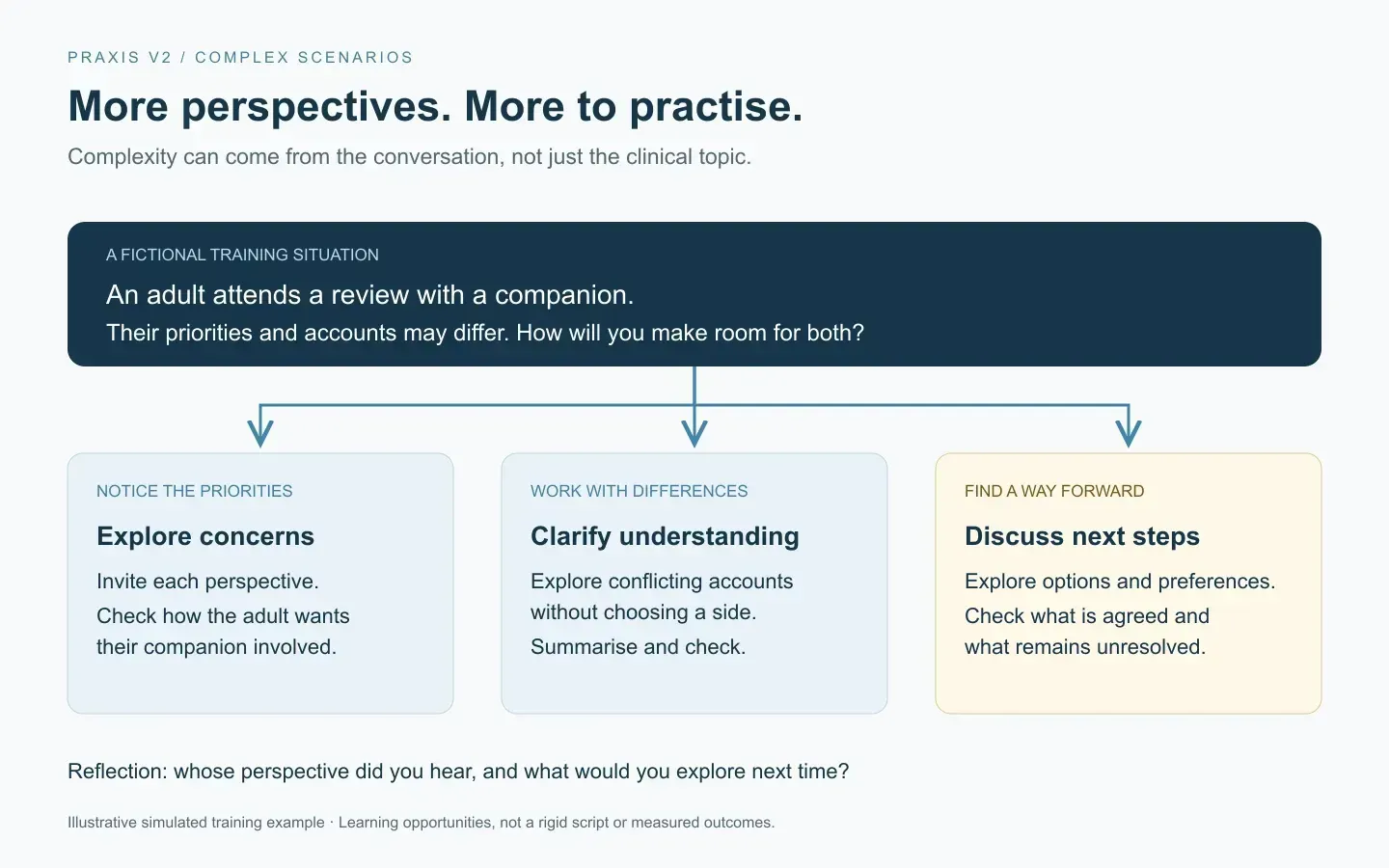
Consider a fictional adult attending a review with a companion. Their accounts differ, and you don’t yet know how the patient wants the companion involved. There is useful work to do before trying to settle the disagreement:
- Explore concerns: invite the patient’s priorities and make room for another perspective.
- Clarify understanding: check what each person means rather than choosing an account too quickly.
- Discuss next steps: find out what is agreed and what is still unresolved.
These are not steps to complete in a fixed order. Something new may take you back to an earlier question. A careful conversation may still end with disagreement.
Choose the right amount of challenge
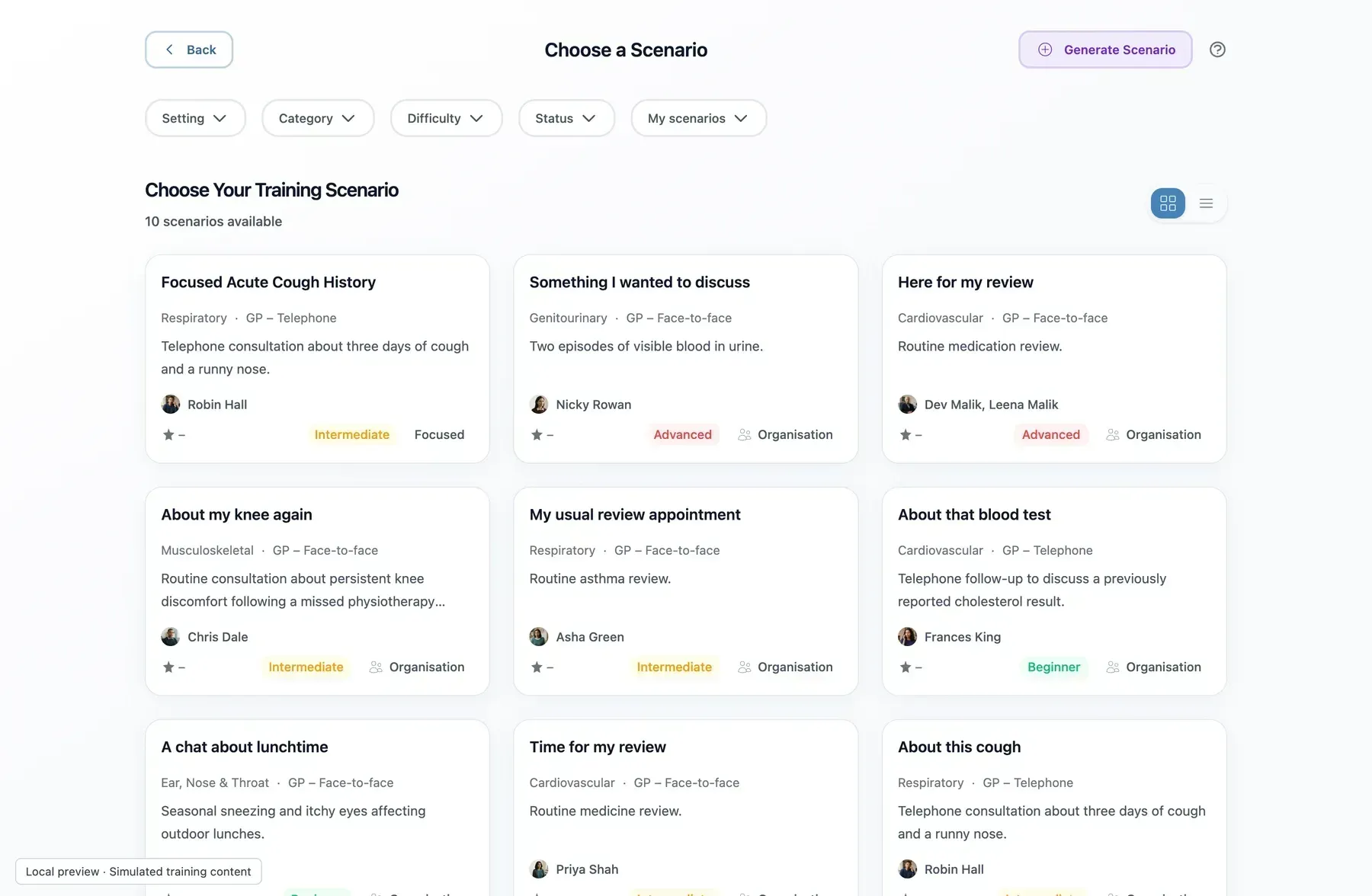
The local V2 catalogue includes focused consultations alongside more complex, multi-participant situations. A short telephone history and an adult-and-companion review ask different things of you.
If you want to work on one skill, a focused case may be enough. If you want to practise managing competing priorities, a more involved scenario gives you somewhere to explore that.
Give the session a focus
Before a demanding scenario, consider choosing one aspect of your communication to notice. For example: “Will I explore the reason for a refusal before explaining the options again?”
Afterwards, return to a specific moment:
- What did you hear, and what did you assume?
- Which question helped someone say more?
- Where might a different approach have helped?
Those questions give reflection more to work with than a general judgement about whether the consultation went well.
The situations and learning map are fictional training examples. They illustrate opportunities to practise, not a required script, proof of competence or advice for a real patient.
Our upcoming educational platform will offer teaching alongside this practice. You could read about a communication skill before a session, or return to it after a difficult exchange. Reading and practice can inform one another without being the same thing.